Ingredients
- 2 tablespoons extra-virgin olive oil
- 1 medium leek (white and light green part), finely chopped
- 1 large garlic clove, minced
- a couple sprigs of fresh thyme
- 300 g risotto rice (1 1/2 cups)
- 200 ml dry white wine
- 1-1.2 litre vegetable or chicken broth
- 2 tablespoons cream cheese
- 2 tablespoons Parmesan, freshly grated (or more)
- freshly squeezed juice from 1/2 lemon, or to taste
- Sea salt & freshly ground pepper, to taste
- Small handful fresh flat-leaf parsley, chopped (optional)
For the topping (optional)
- 200 g Jerusalem artichokes, scrubbed clean (Topinambur)
- 1 tablespoon butter (or more)
Instructions
- Heat the olive oil in a large deep skillet (I use a non-stick wok pan) over medium heat, and add the leek. Cook for a few minutes, stirring frequently, until soft.
- Add the garlic and cook for another couple of minutes. Then add the rice and cook for 1-2 minutes, stirring.
- Add the wine and stir until it is absorbed. Then add the fresh thyme and gradually add the broth, a ladle at a time, stirring frequently, until it has mostly been absorbed. Continue cooking the risotto, adding a ladle full of broth at a time and stirring between additions, until the broth is absorbed. The risotto is done when the rice is just tender (al dente), about 20 minutes or so. Note: if needed adjust heat to medium high, to keep at a light simmer.
- While the risotto is cooking, finely slice the Jerusalem artichokes. Melt the butter in a large skillet. Add the sliced Jerusalem artichokes and fry for 8-10 minutes, turning halfway through until they are cooked through and crisped at the edges. Transfer to a clean plate.
- Once risotto is al dente, stir in the cream cheese and parmesan. Season with salt and pepper, to taste.
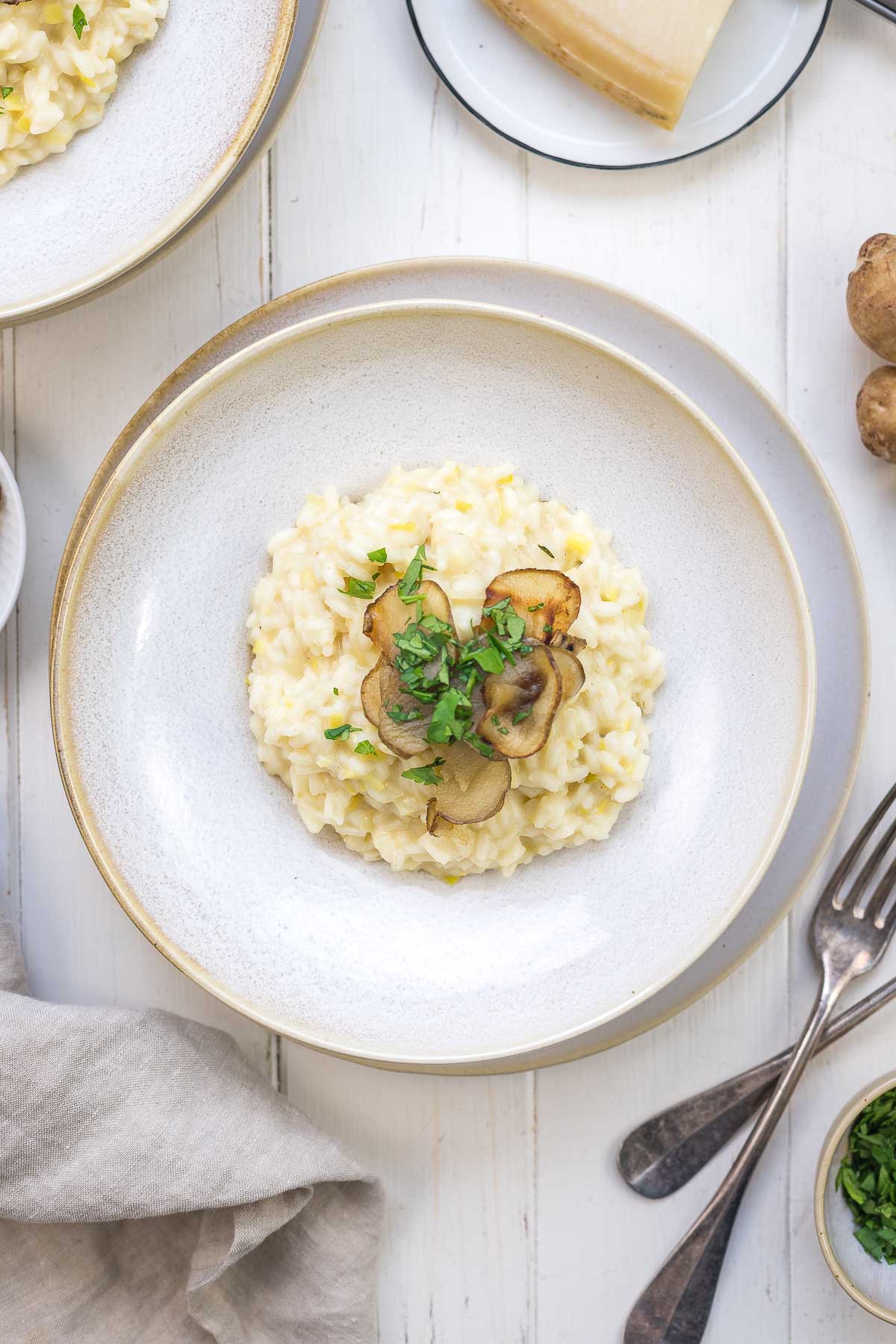
- Top with the fried jerusalem artichokes. Garnish with parsley and more parmesan, if desired.
Nutrition
Notes
- I use half a lemon for this recipe, which gives the risotto a deliciously lemony flavor. Feel free to start with 1 tablespoon and add more to taste, if desired.
- I used a mandoline to thinly slice the sunchokes. I highly recommend using a hard guard or glove to protect your fingers.